#astrodon

100 posts · Last used 4h

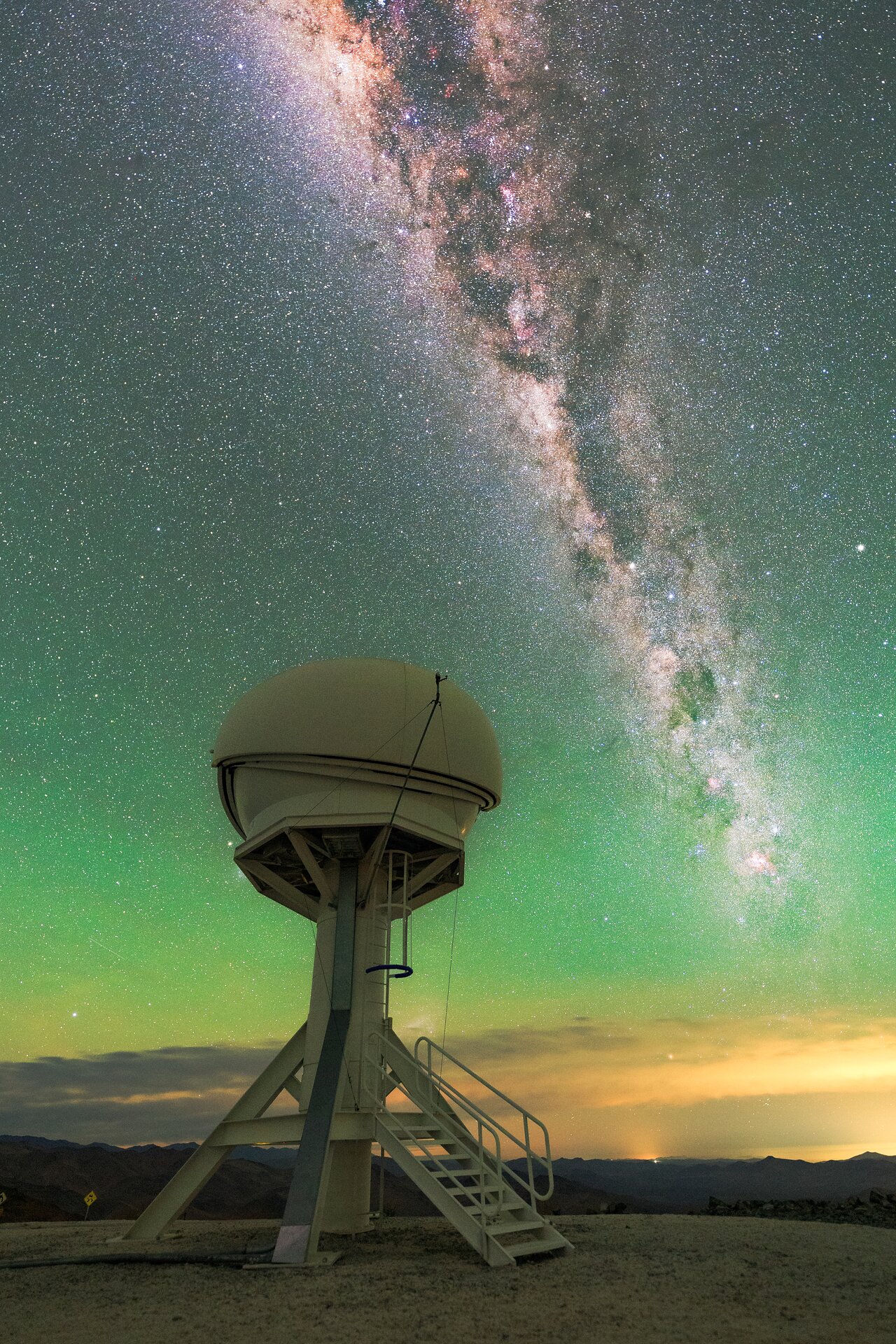
Lights in the sky ✨ The telescope gazing at the Milky Way in admiration is the Danish 1.54-meter telescope, hosted at La Silla in #Chile. And do not worry, the green glow we see in this image –too faint to be seen with the naked eye– is not a result of urban light pollution. This is a natural phenomenon known as airglow. What causes it? Find out: https://www.eso.org/public/images/potw2645a/ 📷 J. Rodrigues/ESO #astrodon #astronomy #astrophysics #space #science
25
0
20
0
Southern Hemisphere Astrophotographers! ⭐💥NEW SUPERNOVA ALERT ⭐💥 It's in a bright, nearby barred spiral galaxy (NGC 1433), which is very favourable for imaging this time of year. Type 1a, so image over weeks + get light curves! Details: https://www.wis-tns.org/object/2026ahvu This galaxy was one of James Dunlop's discoveries (made from here in Sydney in 1826). I've gone back and imaged a lot of Dunlop's galaxies, and just had a look to see if I had anything in my catalogue ... nothing, sadly! Supernova location in yellow circle in DESI image. And this is not limited to folks with the big profesh rigs! People with Seestars and other smart 'scopes should also try. I was able to catch a supernova using my Seestar for weeks *during the light festival* only 1.5 km from the centre of Sydney's city. This is a fun Community Science project! #Astrophotography #NGC1433 #Supernova #Astrodon #Seestar
0
0
2
0
2000 tonnes of steel sliding on a few microns of oil! Our Extremely Large Telescope (ELT) was tilted for the first time in October 2026. To point anywhere in the southern sky the telescope needs to rotate on two different axes. A few months ago it on its vertical axis for the first time. Now, tilting on its horizontal axis is another step in the right direction. Read more: https://www.eso.org/public/videos/potw2643a/ 📹 ESO/Cimolai/Apical/G. Vecchia #astrodon #astronomy #astrophysics #space #science #engineering
163
7
109
1
This object is one of the three BlackGEM telescopes hosted at our La Silla Observatory. Its mission? To help detectors such as LIGO and Virgo to pinpoint powerful gravitational-wave events, like neutron star and black hole mergers, by detecting the visible afterglow that some of these events leave behind. Learn more: https://www.eso.org/public/images/potw2642a/ 📷 J. Rodrigues/ESO #astrodon #astronomy #astrophysics #space #science #astrophotography
22
0
18
0
Replying to
Marc Huertas-Company points out "Loss of Voice" as a problem of LLM use (in writing scientific papers, even just to improve the language). #astrodon #EAS2026
12
2
2
0
Tunnel vision! Step inside the tunnels below our Paranal Observatory in #Chile. They connect the Unit Telescopes, which comprise the Very Large Telescope (VLT), to the control building where the VLT and its instruments are operated by observing teams. And no worries: despite the eerie, sci-fi atmosphere, no drooling, man-eating aliens are roaming there, just astronomers and engineers 😉 Read more: https://www.eso.org/public/images/potw2624a/ 📷 L. Sbordone/ESO #astrodon #astronomy #astrophysics #space #science
83
4
21
1
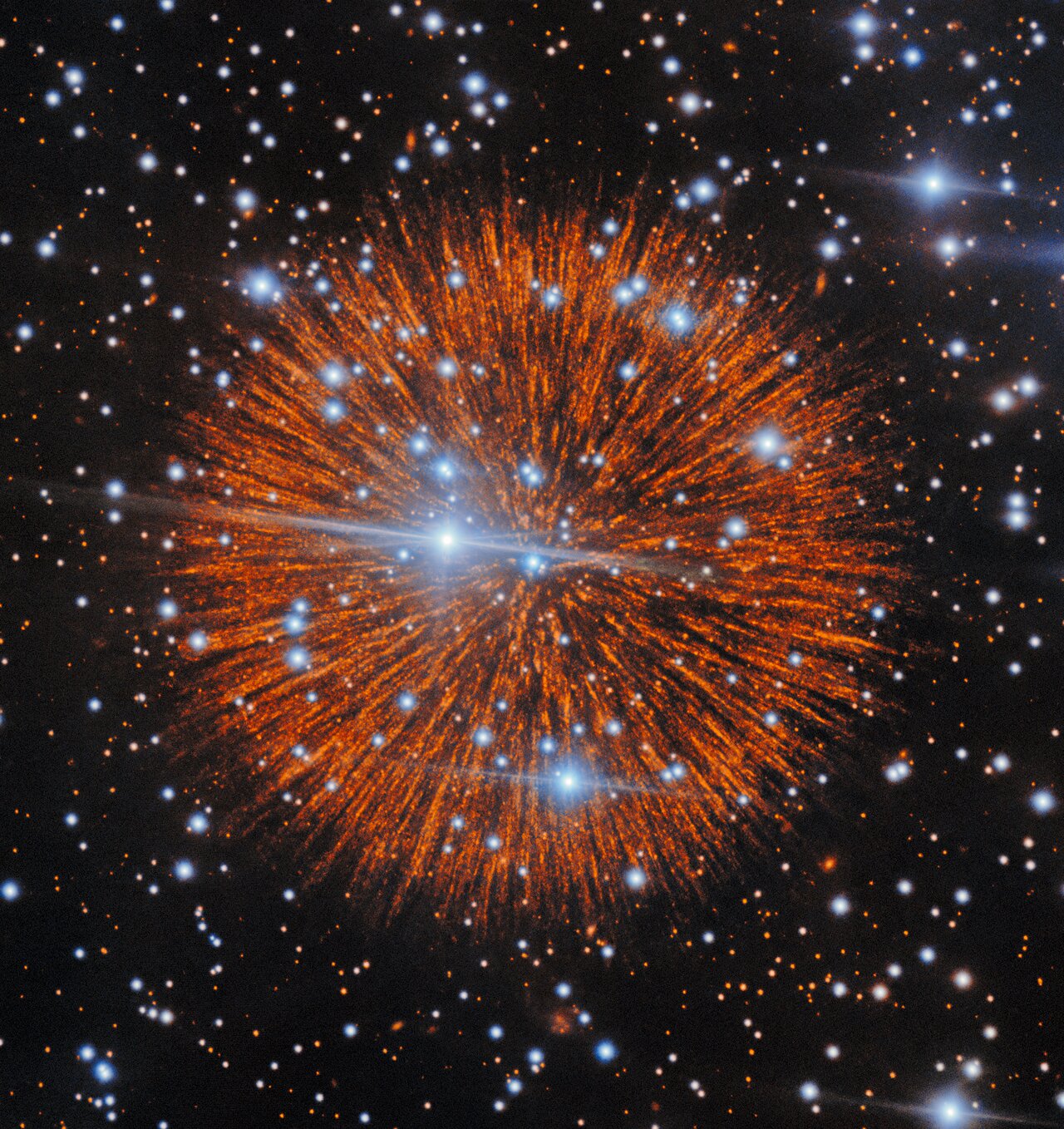
Spotted this great image, yes a real image, last night! It looks like a firework going off! It's of the supernova remnant Pa 30 and was taken by the Gemini Observatory (north). It's probably the only one of these I have ever seen an image of and could also be the only one we know about in the entire Galaxy. Pa 30 (IRAS 00500+6713) has a central white dwarf star (eventually what our Sun will become). The idea is that this supernova ejecta formed in 1181 and may have been observed / documented by Chinese and Japanese astronomers. It's thought to have formed when two white dwarfs collided. Those long radial filaments are likely caused by Rayleigh- Taylor instabilities. The authors of the paper below suggest that these could be what's left over from a slower ejecta shell that has been shaped into these long, narrow structures by the winds of the white dwarf star. The white dwarf itself is fascinating. Likely rapidly rotating and has a very powerful magnetic field (almost as strong as a millisecond pulsar). Truly an odd, yet wonderful Galactic object! Open access paper about this object: arxiv.org/abs/2301.04809 Image: https://noirlab.edu/public/images/noirlab2624a/ 📸 International Gemini Observatory/NOIRLab/NSF/AURA/T. Cunningham/J. Miller & M. Rodriguez /T.A. Rector /D. de Martin & M. Zamani #SupernovaRemnant #Pa30 #GeminiObs #Astrodon #Astronomy
390
8
283
3
1/ This is the longest exposure I've ever taken: 8 months long! It shows the Sun's path on the sky between Apr 17 - Dec 11 2018, as seen from ESO's Paranal Observatory in #Chile. This is part of a collaboration with Diego López Calvín, an expert in solarigraphy: https://solarigrafia.com Diego sent me some of his hand-made #pinhole cameras, which I placed all over Paranal. So what do we see here? See thread below 👇 #astrodon #astronomy #astrophotography #sun #photography
456
10
278
1
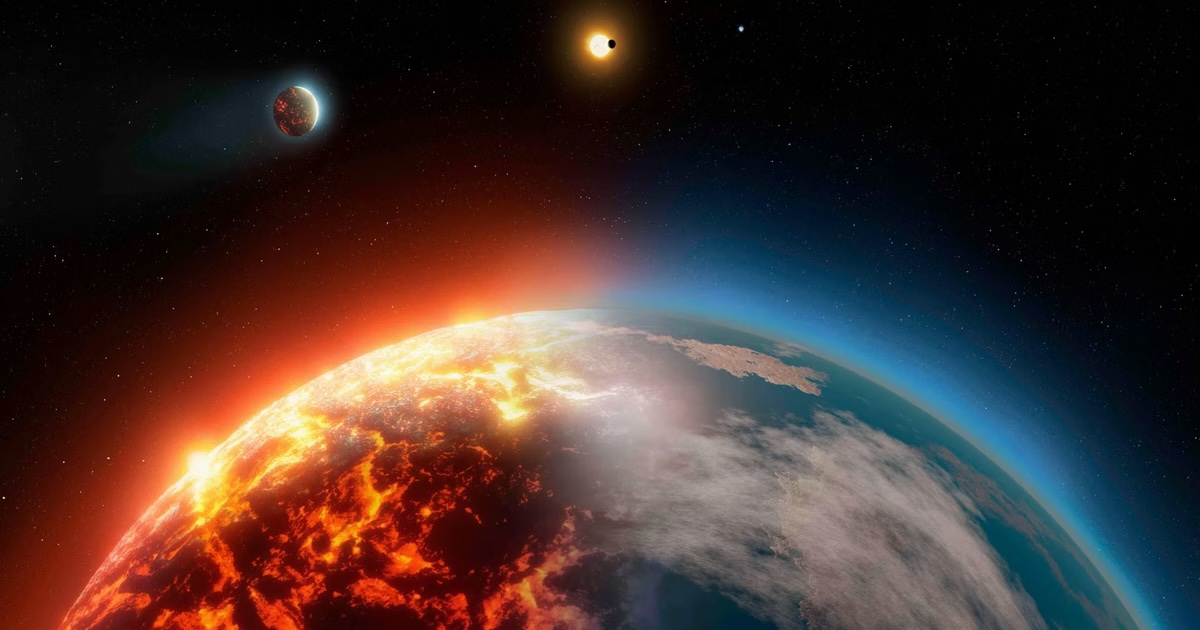
Hello, and welcome! 👋 We're the Forming Worlds Lab at the Kapteyn Astronomical Institute, University of Groningen. We study how rocky planets form and evolve, and what makes a world habitable, from early magma oceans 🌋 to the atmospheres of distant exoplanets 🪐. We model planetary interiors and atmospheres together, and we build the open-source PROTEUS framework our science runs on, in the open. 💻 Over the coming days, we'll introduce our group members one by one, and the research projects each of them leads. After that, expect regularly: 🪐 the wonder of rocky planets and alien worlds 📄 recent papers and science results 🎤 conference updates and talks 📸 life in the Forming Worlds Lab It's an exciting time to explore other worlds. Glad to have you here, follow along! 🌍 Web: https://formingworlds.space Code: https://github.com/FormingWorlds PROTEUS: https://proteus-framework.org #Exoplanets #PlanetaryScience #Astronomy #Astrodon #OpenScience
44
0
29
0
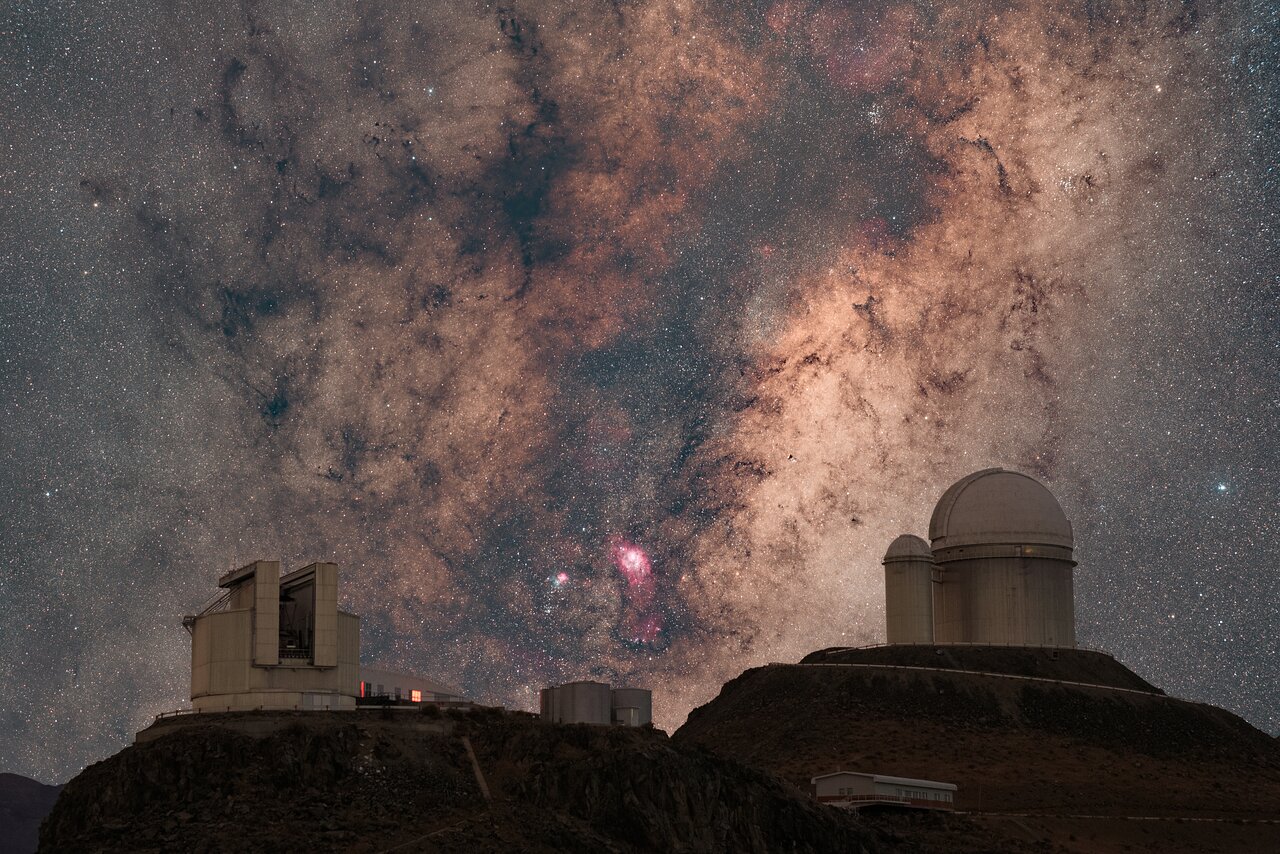
The gleaming Trifid and Lagoon nebulae can be seen between our New Technology Telescope (left) and the ESO 3.6-meter telescope (right) at La Silla. Their red colour comes from hydrogen atoms ionised by young stars in these clouds. The Trifid nebula also shows a blue tint caused by dust reflecting the light of some of these stars. Discover more: https://www.eso.org/public/images/potw2639a/ 📷 J. Rodrigues/ESO #astrodon #astronomy #astrophysics #astrophotography #space #science
86
2
74
0
I've seen November 13, November 15 and November 18 as the day #Voyager1 officially reaches one light day from Earth, so until I figure out which is correct, I haven't added the date May add some stars, too, but I need to get the frame first so I can figure out where to put them Really excited I did this piece and that it was finished-ish in time! Pattern: https://sonovastitch.com/products/carl-sagan-quote-cross-stitch-pattern-instant-download #CrossStitch #Astrodon #NASA
200
14
105
1
Hi folks, as promised, here's one of my first attempts at the Mosaic stacking using the dwarf 3 telescope. I'm not entirely happy with the way that it has turned out, but as a learning process and to give you a look at how things are going I thought I would let you have a look. I think this could use some reprocessing and I'd like to tinker with it a bit more. Maybe it's one to get some other of my mates with Dwarf3 to do a star party collab with. But as it is - not unattractive and gives me a feel for how it works. So what we're looking at here is a good wide view at least in terms of how the dwarf 3 does it of the Rho Ophiuchi neighborhood and the nebulas hanging around there. #Astrophotography #BackyardAstrophotography #SouthernHemisphereAstronomy #SmartTelescope #Dwarf3 #Nebula #Astrodon
46
6
21
0
A bubbling Betelgeuse ⭐️ 🫧 Taken with ALMA, this is one of the most detailed views yet of the surface of the iconic star Betelgeuse. The star's surface is uneven and lumpy, with peaks and troughs originating from giant bubbles of hot gas rising from deep within the star to its surface. 1/2 📷 ALMA(ESO/NAOJ/NRAO)/W. Dent et al. #astrodon #astronomy #astrophysics #space #science
154
2
133
2
Am Mittwoch-Abend gibt es eine Sonnenfinsternis, die in der Region Hannover eine maximale Verfinsterung von immerhin 86 % erreichen wird. Von der Sonne bleibt dann nur noch eine schmale Sichel. Und weil das auch noch weniger als eine Stunde vor Sonnenuntergang passiert, könnte das sehr schön werden – klaren Himmel vorausgesetzt. Ich habe ein paar Tipps zur Beobachtung aufgeschrieben: https://bknispel.de/2026/08/10/sonnenfinsternis-am-12-august-2026/ #Sonnenfinsternis #SoFi2026 #SoFi #Hannover #Wedemark #Astronomie #Astrodon
32
2
34
0