https://eidon.bandcamp.com/track/sh-stvie
Ecco il mio ultimo brano: uno scherzo (in tutti i sensi XD) per tre pianoforti, tre batterie, contrabbasso, doumbek, marimba e percussioni orchestrali.
*Shéstvie* (Шествие) è un termine russo che significa processione, corteo o marcia cerimoniale. Evoca l'immagine di un gruppo che avanza compatto, spesso con solennità e dignità. Si può usare anche in senso ironico, per indicare, ad esempio, qualcuno che cammina ostentando un'esagerata importanza. Dalle mie parti si dice "dikke nek" (in olandese "collo grosso":
persona presuntuosa che ama mettersi in mostra, fare il sapientone o darsi arie importanti)
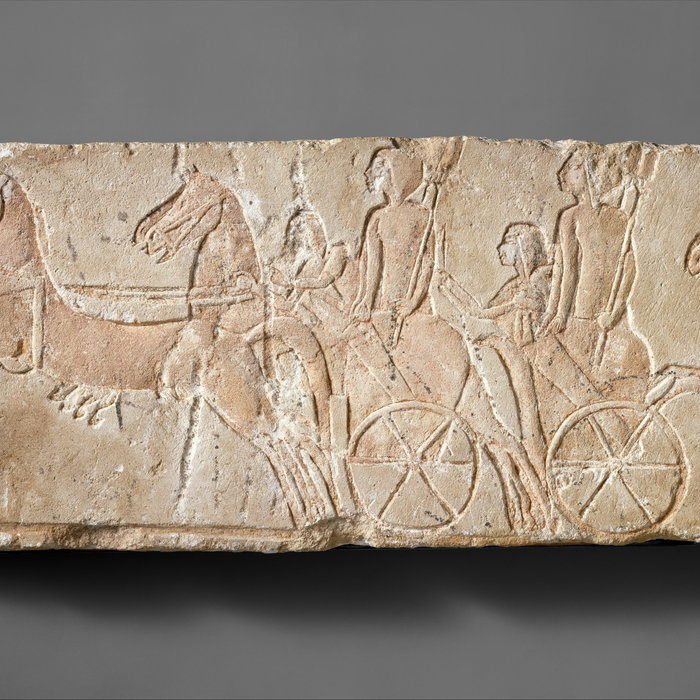
Qui uso una immagine che ho scaricato dal Met: "Carri con dame di corte", antico Egitto, periodo di Amarna (circa 1347-1330 a.C.)
Come ho già accennato a proposito di un altro brano, Of Gods and Horses, trovo che ci sia una sorprendente somiglianza tra le raffigurazioni di cavalli egizi come queste e il "Dio Cavallo" che si può ammirare nel kofun di Takehara, in Giappone.
Poi ho controllato: il rilievo del Met risale al regno di Akhenaton. Le iscrizioni di cui parlo nell' altro link sono state ritrovate as Akhetaton, la capitale fondata da Akhenaton; in altre parole, le due opere appartengono allo stesso, breve arco temporale in cui la città fu abitata.
Avete mai letto il manga "The Dark Myth" di Daijirō Morohoshi? Ve lo consiglio caldamente...
#music #manga#MorohoshiDaijiro #theDarkMyth#bandcampfriday
#thedarkmyth
2 posts · Last used 4d

https://eidon.bandcamp.com/track/sh-stvie
A ceremonial scherzo for three pianos, three drum kits, double bass, marimba and orchestral percussion.
Shéstvie (Шествие) is a Russian word meaning procession, cortege, or ceremonial march. It evokes the image of a group advancing together, often with solemnity and dignity. Also used ironically, to denote e.g. someone walking with an exaggerated sense of importance.
The image I use is "Chariots with Court Ladies", Egypt, New Kingdom, Amarna Period (ca. 1347-1330 BCE)
Court ladies taking part in a royal procession stand in light chariots, as their drivers race to keep up with the royal family in their chariots.
www.metmuseum.org/art/collection/search/544889
As I mentioned in another piece, "Of Gods and Horses" (eidon.bandcamp.com/track/of-gods-and-horses), I see a striking resemblance between depictions of Egyptian horses like these and the Horse God of the Takehara Kofun in Japan.
The relief at the Met dates to the reign of Akhenaten. The House of Ra’nufer, whose doorpost inscriptions first sparked the comparison, stood in Akhetaten, the capital Akhenaten founded, so the two works belong to the same brief span of years in which the city was inhabited.
Have you ever read Daijirō Morohoshi’s manga "The Dark Myth"? Highly recommended...
#music #manga#MorohoshiDaijiro #theDarkMyth@composers@fedigroups.social@minimalism@mastodon.ml#bandcampfriday
You've seen all posts